 Apple Podcasts
 Spotify
 YouTube
 iHeart
Every year on November 3, jellyfish take center stage. We chatted with Dauphin Island Sea Lab Discovery Hall Programs educator Greg Graeber about what jellyfish are and how to avoid their sting.
Jellyfish are an invertebrate and a member of the phylum Cnidaria. They are about 95% water. They do not have brains, blood, or even a heart. They do have a central nervous system that allows them to smell, detect light, and respond to other stimuli. Their tentacles are covered in thousands of stinging cells called cnidocytes. These stinging cells help the jellyfish capture prey and act as defense. The severity of a sting varies.
Common Jellyfish in the Gulf
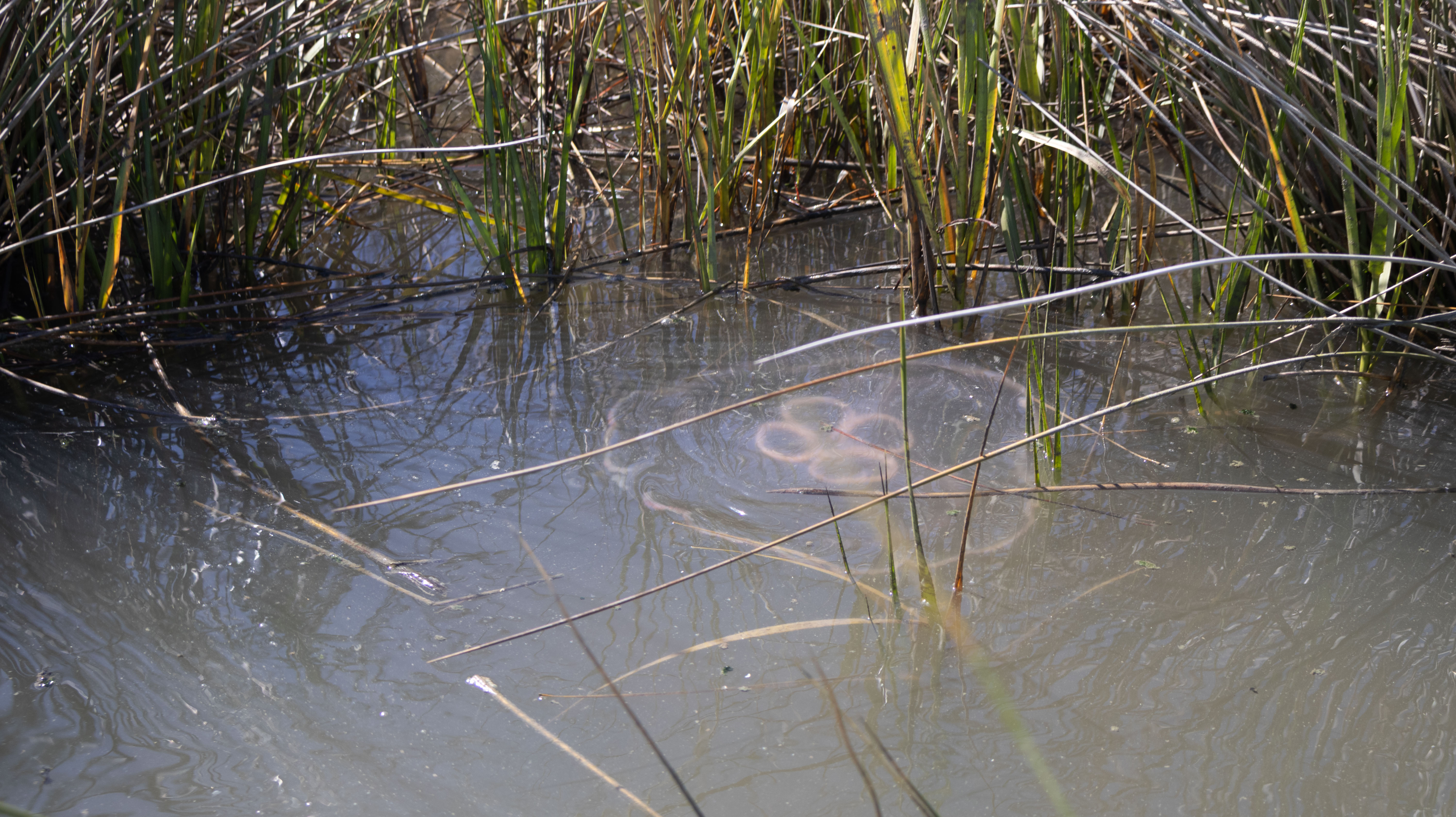
Moon Jellyfish
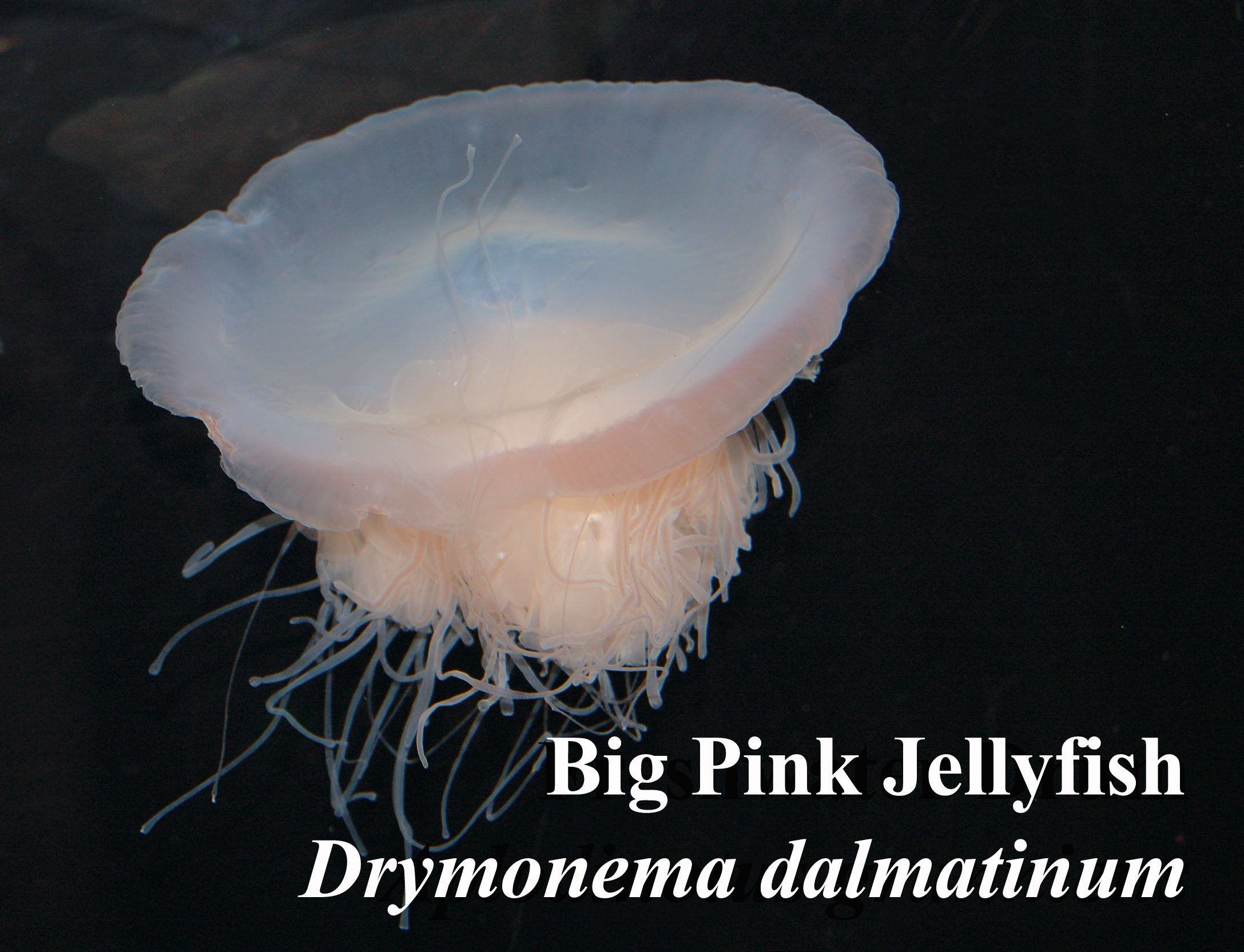
Pink Meanie
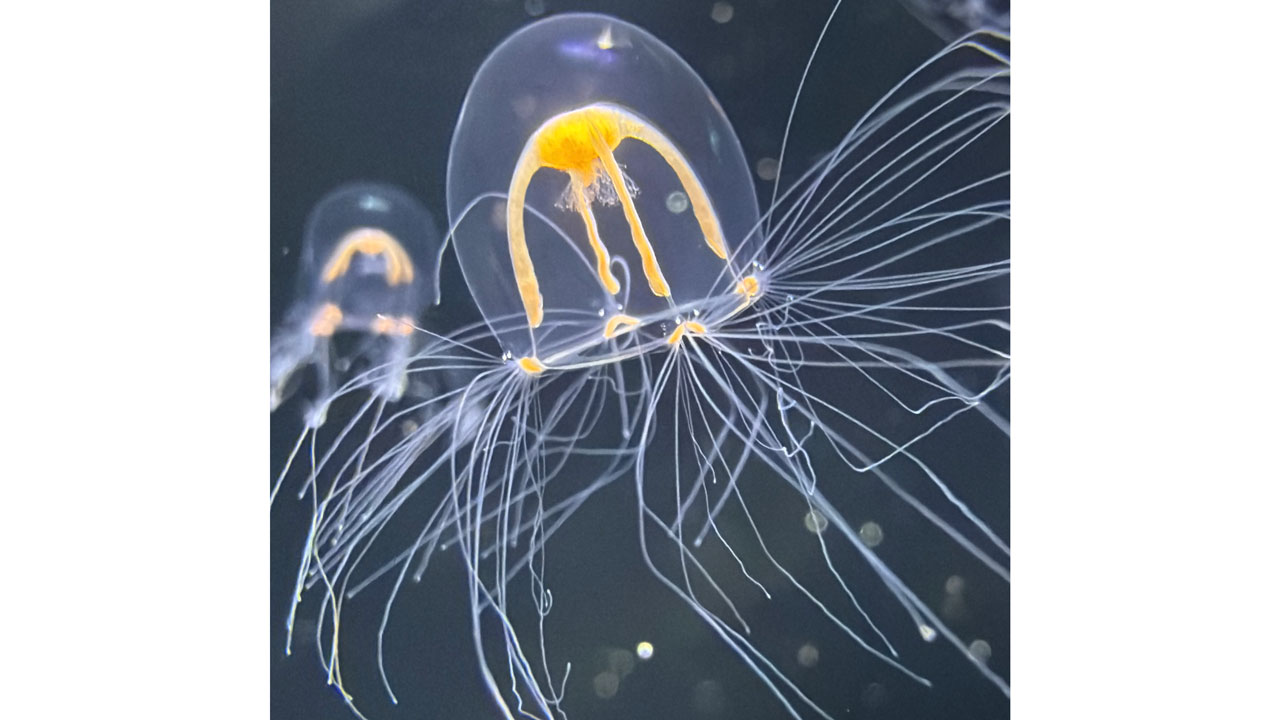
Nemopsis
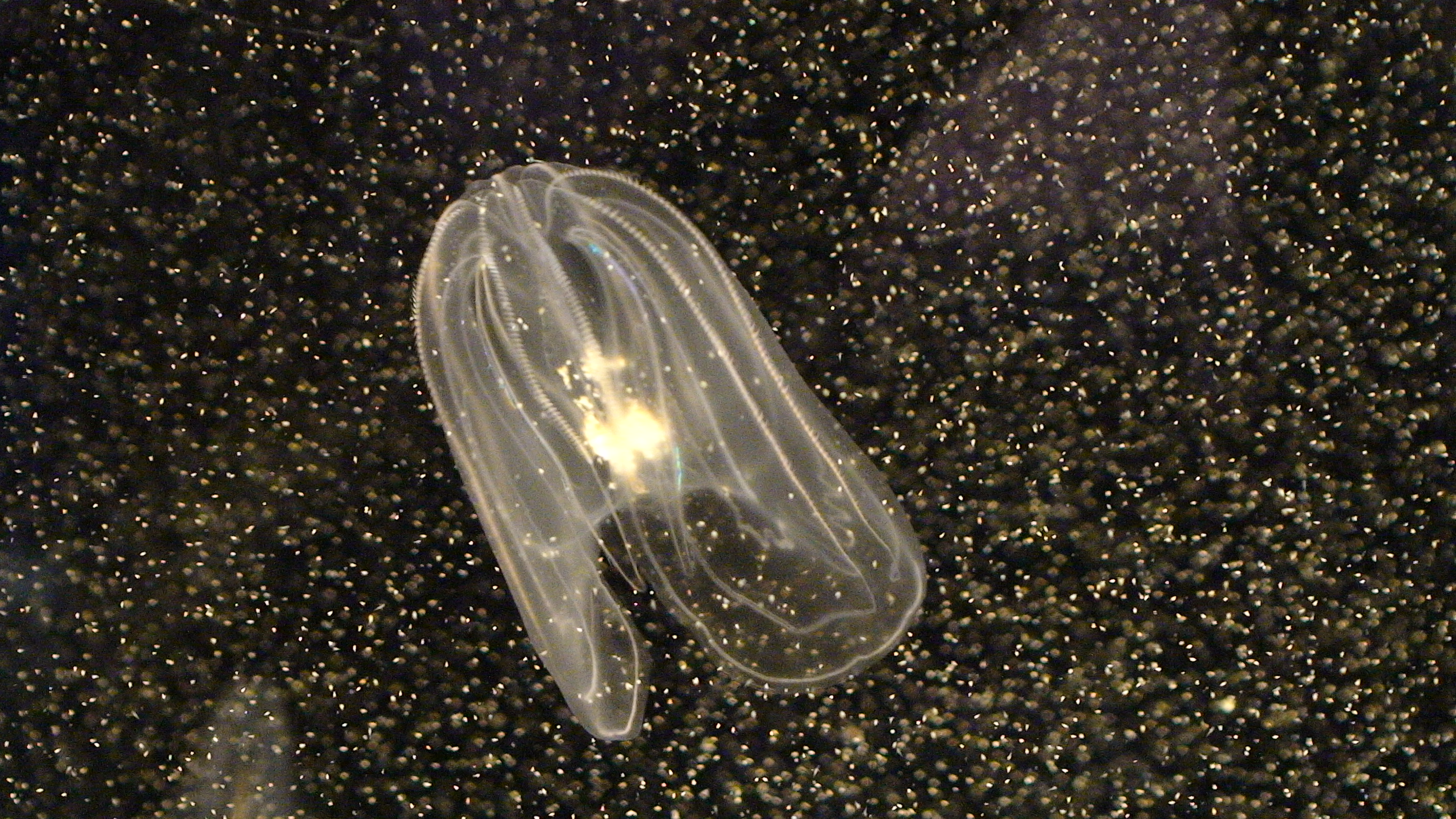
Comb Jelly
Comb jellies are not true jellyfish. They do not have stinging cells. They are from the phylum Ctenophora.
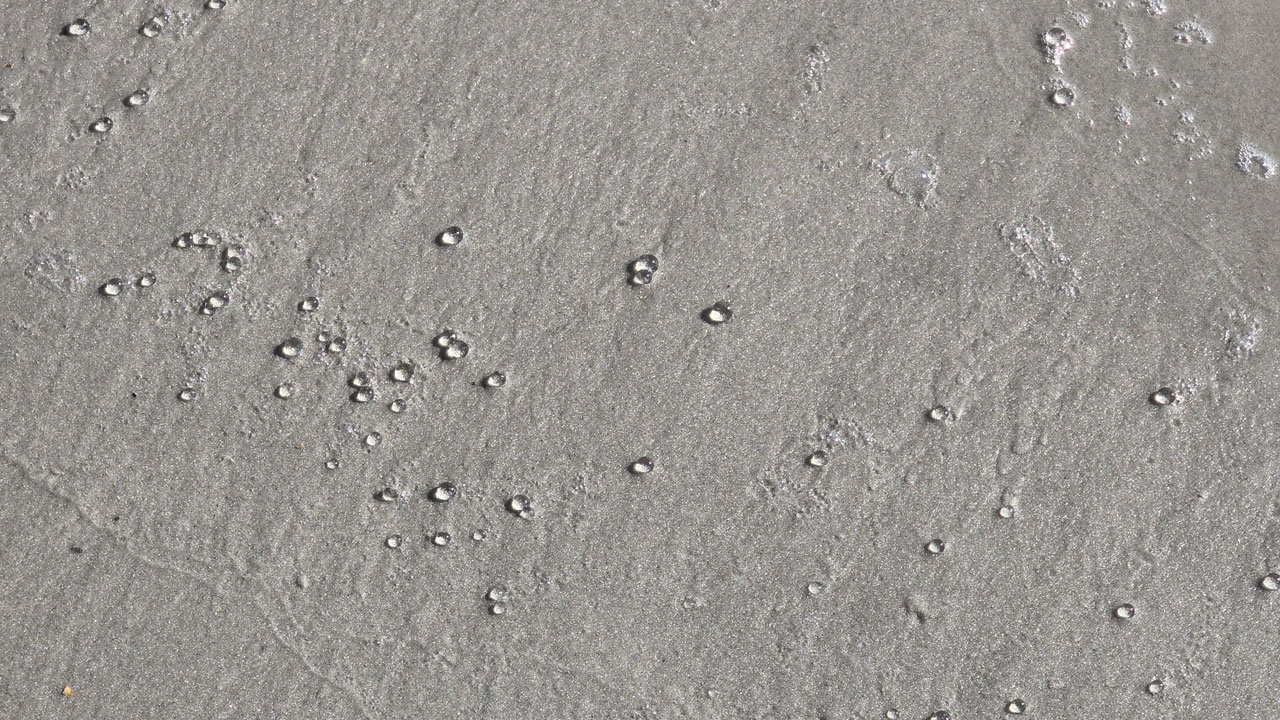
Pictured above are baby comb jellies. They look like tapioca pearls on the sand.
Jellyfish Larvae
Related Articles
- Jellies, Monterey Bay Aquarium
- How do jellyfish sting?, Smithsonian
- What are jellyfish made of?, National Oceanic and Atmospheric Administration
Jellyfish Day 2020
This video from jellyfish day in 2020 shows a sea nettle on display at the Alabama Aquarium during feeding time.
Transcript
Angela Levins, PR Director Thank you for joining us on this episode of the Sea Lab sidebar. We’re going to chat about jellyfish with marine educator Greg Graber. Thank you so much for joining us.
Greg Graeber, DISL Discovery Hall Programs Marine Educator Glad to be here. Thanks for having me, Angela.
Levins So I think we want to start out with one of the top questions that I have about jellyfish is what are the misconceptions?
Graeber Well, probably the biggest misconception is that if you’re at the beach and you see something that looks like a jellyfish, it might not even be a jellyfish. So even though your parents think you’re gonna die if you touch it, the odds are good that it’s not going to actually sting you.
Levins So what is it that they’re looking at if it’s not a jellyfish?
Graeber So there’s a couple of choices. But the most common one is the little clear globs that wash up on the beach known as comb jellies to some people. Some people actually call them sea snot. Um, but those comb jellies are not true jellies. They’re in their own phylum. If we’re talking science today called Tina Force. And so c t e n I believe in Greek means comb. And what it is, is they have these stripes down the side that have millions of little hairs. If the people can think about biology class back in the day, that beat together, those hairs do called cilia. And so they are the largest supposedly animal that can move by ciliary action, these little tiny microscopic hairs.
Levins So what’s the biggest difference then between a comb jelly and a true jellyfish?
Graeber Comb jellies cannot sting. They don’t have stingers. They have a couple of other things that they can do that are kind of sticky and that sort of thing. Um, but they technically can’t sting, so they have no what are called nematocysts or stinging cells, um, within their bodies. So that’s not what they do. They do eat things and they eat smaller plankton and they’re considered plankton themselves, but they are harmless.
Levins So what you’re telling me is that to be considered a true jellyfish, there is a stinging aspect to this.
Graeber All of them and their cousins. So they are in a giant group, not ten fours. They are what we call in science Nigerians. D n I. When there are not a lot of English words that begin C and I. But we do have K and I for night knife. And so they get the name as knife bearing animals essentially is how they get their names. So when you get stung, there’s a little tiny harpoon knife that pokes into you a thousand times, a million times. Uh, however bad your sting actually is,
Levins what are the most common jellyfish that we see here around the Gulf?
Graeber Well, right now we are in the thick of jellyfish season. And so when we see them coming in, a fun word about jellyfish is when they’re in giant groups like they are. They’re not a pod. They’re not a school. A lot of people have heard the words from Wild Kratts and other TV shows that they’re called a smack of jellyfish. Well, we are in the midst of it right now, and it is fall right in time for fall break. The moon jellies are out in full force right now. And so for the people that have been to the beach and are familiar with those, they’re easy to ID right now. They’re the size of a pizza washed up on the beach, and they have the four leaf clover of pink. What they don’t have are the long trailing tentacles like we think a jellyfish would have. They’re up around the bell, around the circle of the jellyfish are wispy hairs, and those are their true tentacles that sting. And they’re very mild. They are. I kind of associate it with poison ivy, maybe where some people at wrecks and it’s really annoying. Um, and then some people, it doesn’t really matter, but it’s not super painful. In fact, we were out collecting critters at the marsh right when the season started and we caught a fresh moon jelly. And one of the kids that was pulling a net with me got it on their calf muscle and on their thigh, and he could feel it for sure because it was very fresh. But, you know, he wasn’t hurt necessarily, just annoyed.
Levins So that’s kind of the cool thing is when we have the groups, whether it’s, you know, the adults that come down for family camp or the excursions that are here or our summer camps or academic year groups, is that you as educators, you get to take them out into the field and they get to see these up close. So great learning lesson right there.
Graeber Oh, yeah. No doubt. And so when we have been on the beach this week, it’s not only moon jelly season as well. We have multiple different kinds of those. Comb jellies also washing up some right now are super small and they look like, uh, tapioca pearls in your boba tea kind of thing is essentially what they look like. Little clear, um, really small, almost concentric circle, uh, balls. The other thing that’s out right now that we saw on the boat yesterday is what was described here at the Dauphin Island Sea Lab more than a decade ago. And that is what is known as the Pink meanie that has become a popular name, uh, that whether people use and, you know, websites use, but that’s its common name that nobody ever thought it would stick, but it has. Um, and they’re really not that mean. So they’re not a huge stinger, but it was described by a scientist here at the sea lab named Keith before. And so, um, it became its own species here at the lab, which is pretty neat, but they’re huge. And they are out right now as well. So not looking like a pizza. These guys look like a giant pink or purple glob, but with really, really, really long hair. And so it’s a really interesting jellyfish, um, that hangs out here, but that jelly is, uh, out and about right now. And so we saw quite a few of these big pink meanies underneath the boat mixed in with the comb. The comb jellies and the moon jellies.
Levins So is a sea nettle considered in the jellyfish family, correct?
Graeber Yeah. So it’s kind of funny because the way the life cycles of jellyfish work, the moon jellies, it’s fall every year like clockwork. The moon jellies are back in the fall right now. And then, prior to that, late summer is when the sea nettles will be here. And that’s the one that ruins people’s day at the beach. They’re not going to kill you. They’re not going to maim you. But they hurt. It doesn’t matter who you are. You get it on your back. You get it on your leg. You get it on your arm. It hurts. And so, of course, the other question that we always get is, how do you deal with the jellyfish sting? And in general, the idea is that once you’ve been stung, you’re kind of done. Okay. Um, but having a squirt bottle of vinegar is never a bad idea. And then what occasionally occurs as well is something that people think is a jellyfish, but isn’t. That’s a Portuguese man o’ war. And so those are the blue bubbles that look like bubblicious bubble gum pinched off on the beach with really long tentacles that can be, you know, tens of feet long. And that’s when, historically, people have used meat tenderizer. And so the idea is that meat tenderizer on a steak, when you pound a steak, breaks down protein and makes it softer, right? Instead of tougher. Well, the same idea is that it supposedly deals with the proteins of the sting. And I was out years ago with a teacher workshop, and we were in the Florida Keys with the Sea Lab doing a teacher workshop. And a kid down the beach from us got an award, unfortunately. And it was, I mean, a blood-curdling scream from down the beach. But luckily for us, we had a little pack of vinegar and some meat tenderizer in case, because we were down in the Keys with corals and other things. And so, one person in the group, you know, the kid, came over; we had some stuff and helped them out.
Levins So when you pack your beach bag, you want to pack meat tenderizer and sunscreen and a bottle of vinegar along with your sandwiches and chips, right?
Graeber Yeah, a little squirt bottle, just like one of those things you buy at Walmart with a tiny squirt bottle that you use to squirt stuff at your house, just a little diluted vinegar. And, and, uh, supposedly they help. So I’ve never really used it, but you definitely don’t want to do what they did on Friends a few years ago, right? A couple of decades ago. Yeah. It’s just an excuse to, uh, you know, embarrass your friend. So. So you don’t need to go to extremes. There are some smaller ones, some other ways that you can. There are other ways. And there’s over-the-counter stuff that you can buy at some places that you don’t know if they’re for real or if they’re just kind of like snake oil, hey, it’s not gonna hurt, you know, if you use this. But yeah.
Levins So Greg, before we wrap up, let me ask you this. What is your favorite part about a jellyfish?
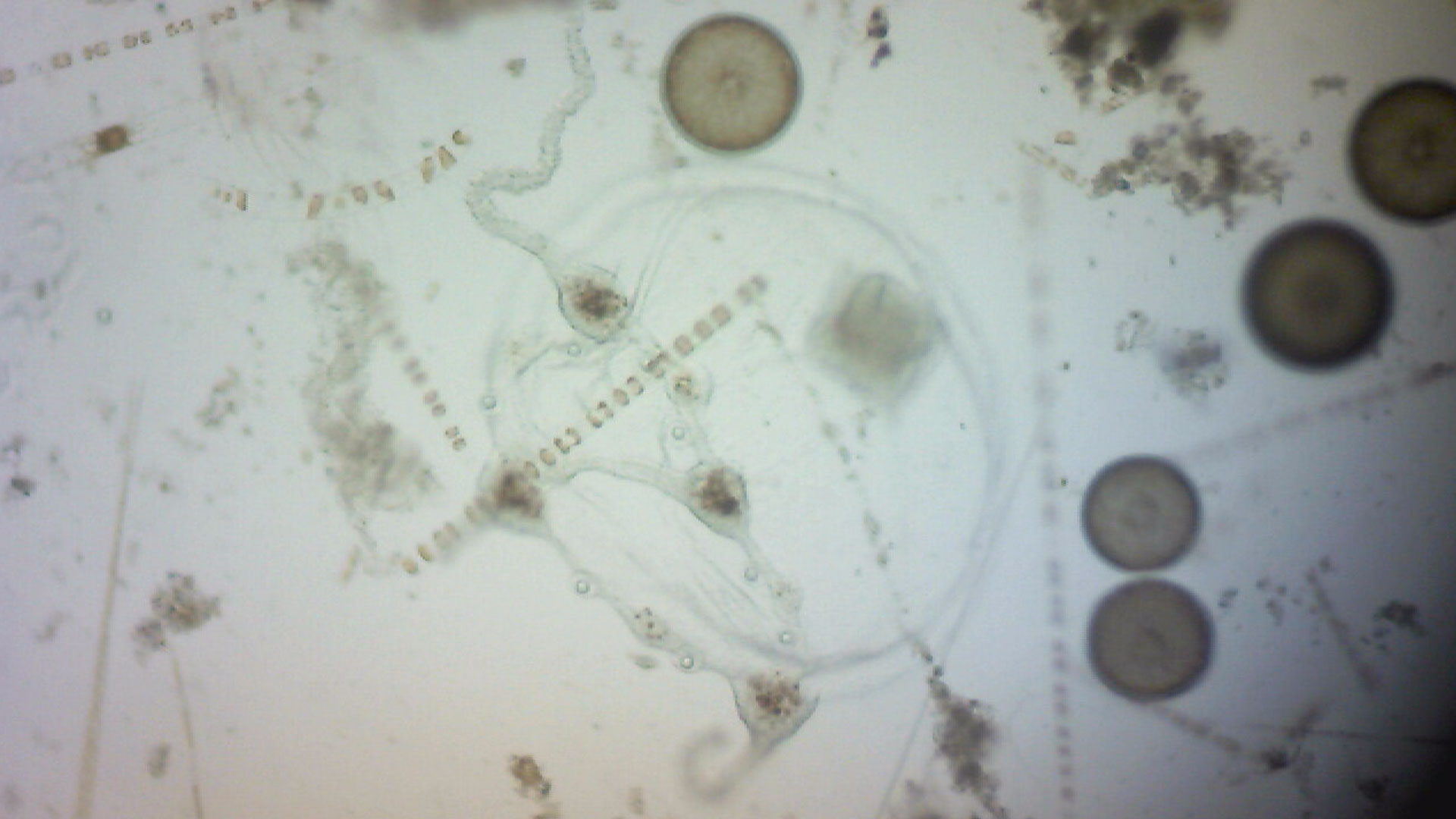
Graeber Well, I think it’s kind of the misconceptions about jellyfish. Um. Is that some sting really bad? Some don’t. And the neatest part, I think, is seeing them as little babies under a microscope; when they are larval plankton, they look like a pulsating eyeball, and you can see the tentacles and everything. So when we’re pulling our plankton samples, we can actually see these little tiny juvenile jellyfish that will grow and turn into that final stage of life. And a lot of people think a jellyfish, when you see the jellyfish, that’s the end of its life. That’s the final stage of life. And that’s their reproductive stage.
Levins And I guess I should have asked, what is the largest jellyfish that’s out there?
Graeber Ooh. Because we talked about the pink meanie, which is big.
Levins Is there something bigger than that?
Graeber A lot bigger. And so it is maybe the longest animal on the planet. I’m pretty sure it is. And that is called a lion’s mane. Luckily, they’re not that big in warm water. But if you go under an ice sheet and you’re in cold water, I believe, I think, it’s eighteen seventy. There was one measured one hundred and twenty feet as a solitary, singular animal, which is different from, like, a man o war, which a lot of people think is a jellyfish, but it’s actually a lot of little critters making up a really big critter. But you’re talking about an animal that can be from maybe home plate to the pitcher’s mound on a baseball field. So they get really big, but not half the length of a football field, big. And so that is a lion’s mane. And it’s generally considered, I think, still the largest plankton on the Earth. But it’s also, I think, the longest solitary animal on the planet. I’m not one hundred percent sure, but I think that’s the deal.
Levins And what would be the smallest one?
Graeber Oh, gosh, they’re really small. Um, whew, I don’t know. That’s a good question. But these little boba pearl tea comb jellies that we’ve been seeing, they’re pretty small. And so we’ll get larval jellies in our plankton as well.
Levins So we can see them even when they’re not what people think of as jellyfish when they’re in that larval stage, are they still able to sting?
Graeber Yeah. And they’re eating other critters. That, uh, stage, I believe, is called an ephyra. And it looks like a flower, essentially, that pulsates with a circle in the middle, and the tentacles are around it, and they would look really interesting. They’re really fun underneath the scope. And we’ve been seeing a lot of them. So maybe if you’re out in the water and you feel these itty bitty stings, it may be jellyfish that you just don’t see. That’s definitely a possibility. And we were teaching students; we were snorkeling years ago, and it was one of those things where you had to cross your eyes in front of your mask and a snorkel, and there were all these tiny jellyfish, and everybody felt like they were getting pinpricked all over their body. It was a miserable day to go snorkeling, but, uh, yeah, you could kind of see these little tiny jellies in front of your, uh, mask.
Levins Well, thank you so much for joining us, Greg, and for sharing some jellyfish facts and fun little stories from your years as an educator. Um, and we’ll have you back on soon to chat about something else. Cool.
Graeber Thanks. It was fun.