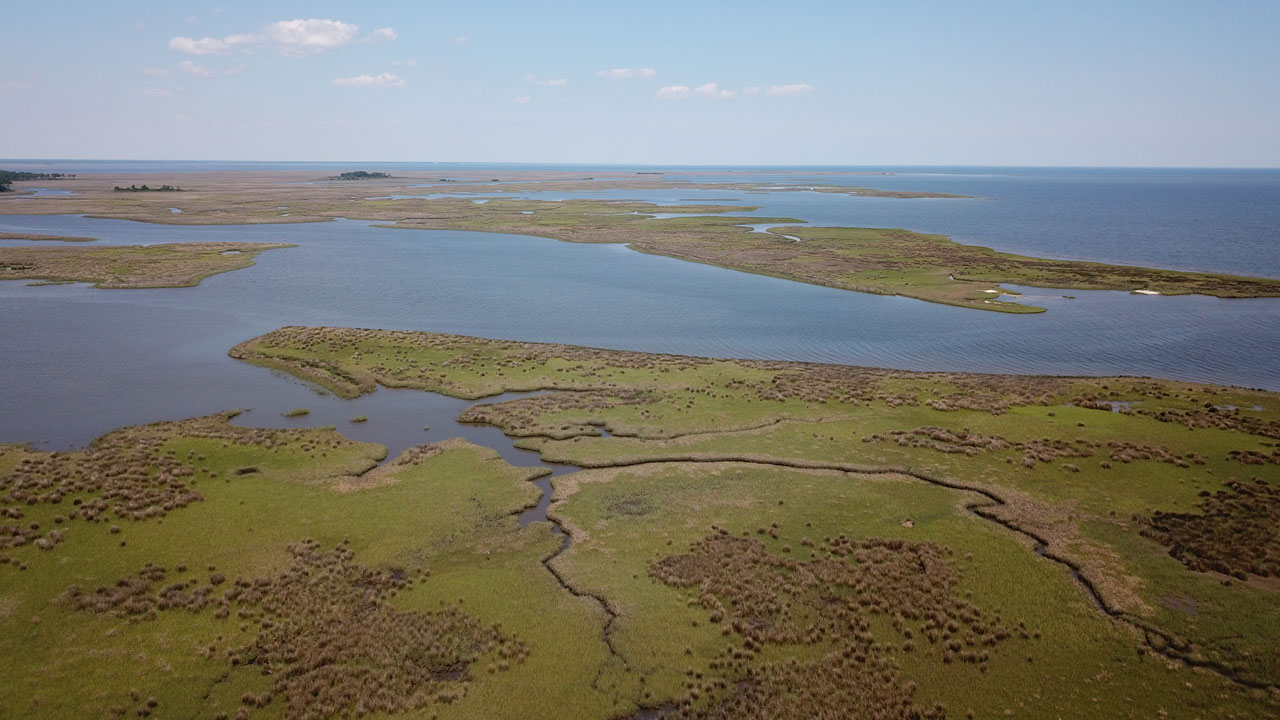
A comprehensive analysis of water quality in the National Estuarine Research Reserves highlights the importance of long-term monitoring. Researchers analyzed more than 250 million data points from 29 U.S. NERRs and found that climate change and nutrient pollution are affecting estuaries across the United States. DISL faculty member Dr. Jennifer DeBose was a part of the research team.
Estuaries are coastal transition zones and, as such, are ecologically and economically valuable environments. They provide a vital nursery ground for commercial and recreational fisheries and create natural buffers for coastal infrastructure. In the early 1990s, the NERRS System-Wide Monitoring Program was established. Today, it collects the most comprehensive dataset available on estuary water quality in the United States.
The researchers published their analysis of nearly two decades of data in the Nature journal Communications Earth & Environment. The study highlights a nationwide shift in estuarine conditions: nearly two-thirds of monitored sites are experiencing rising water temperatures and increased chlorophyll-a, while about half show decreasing oxygen levels. Researchers highlight that changing nutrient concentrations, not temperature, is the main trigger of increased chlorophyll-a. Chlorophyll-a is a key component of photosynthesis and a natural part of aquatic ecosystems; however, in excess, chlorophyll-a, coupled with increasing temperatures, can lead to low oxygen levels. Decreasing oxygen levels continue to threaten marine life and coastal economies across the United States. Increased eutrophication, which involves more nutrients and more chlorophyll-a, can also increase turbidity in estuaries, reducing carbon dioxide storage through photosynthesis.
Estuaries in different coastal regions face different stressors shaped by water chemistry and local runoff sources. This synthesis found that the sites could be grouped into four different clusters, based on their water quality characteristics. Mississippi (Grand Bay NERR) and Alabama (Weeks Bay NERR) both shared characteristics of cluster B, while Alabama also shared freshwater characteristics of cluster A. Their shared group had higher water temperatures, salinity, and pH, which signals more marine influence. Half of the Weeks Bay NERR sites fell into a second cluster of freshwater-dominated sites, which had the highest nitrogen loads, lowest pH and salinity, and higher turbidity and chlorophyll-a.
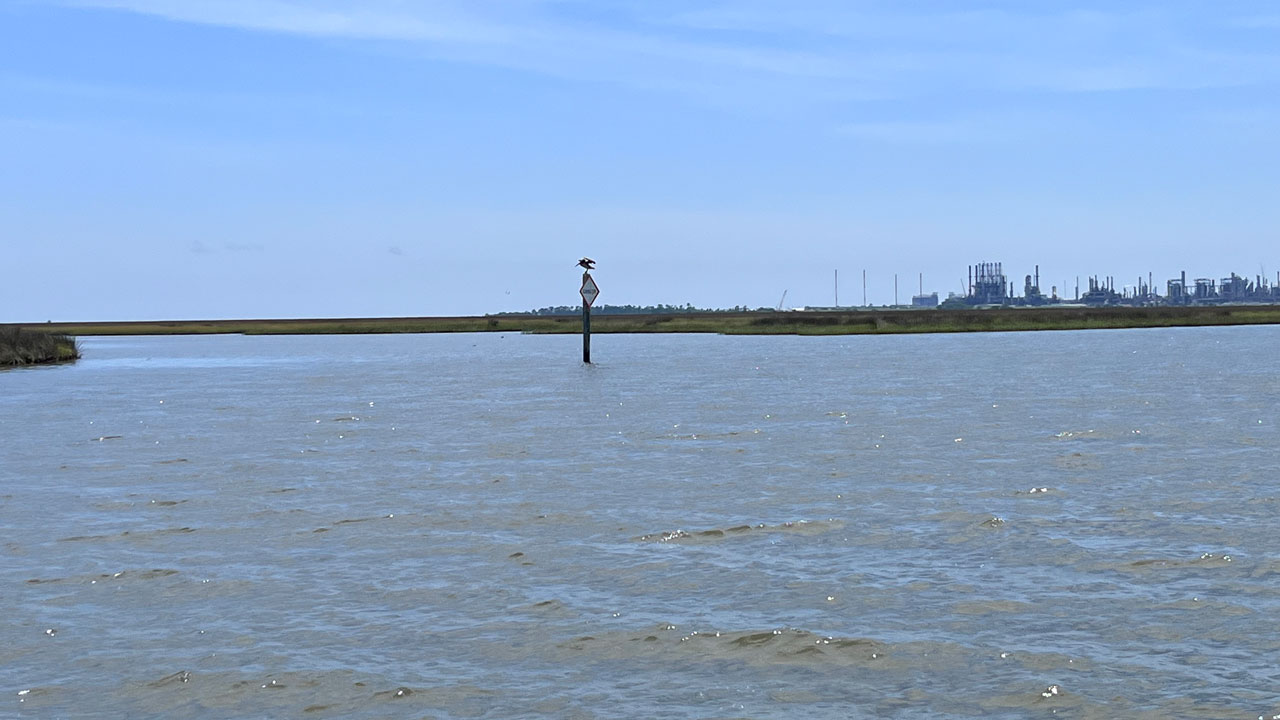
The findings in this paper show that coastal estuaries face many pressures from human land-use activities and climate change, which creates a complex feedback loop that degrades water quality. Changes in local nutrient runoff can trigger cascading environmental impacts, making watershed management crucial to protecting estuarine environments.
Estuarine conditions can shift quickly, so sustained data collection is crucial to track ecological changes and guide science-based conservation strategies.
Reinl, K.L., Dunn, R.P., Cressman, K.A. et al. In situ observations reveal continental-scale warming, oxygen decline, and eutrophication in U.S. estuaries. Commun Earth Environ 7, 716 (2026). https://doi.org/10.1038/s43247-026-03934-w