Biography
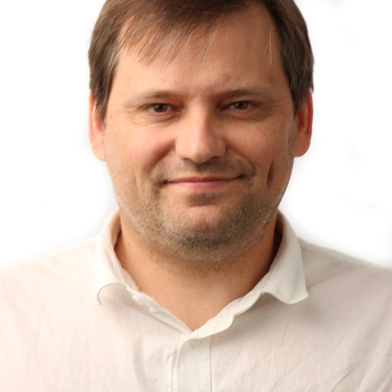
Dr. Marshall W. Bowles is a Senior Marine Scientist II at the Dauphin Island Sea Lab. He moved to Alabama from Louisiana, where he served as an Associate Professor at the Louisiana Universities Marine Consortium (LUMCON).
He holds a Master of Environmental Management in Water & Air Resources from Duke University (2005) and a Ph.D. in Marine Biogeochemistry from the University of Georgia (2011). Following his doctoral studies, he conducted extensive research as a Postdoctoral Fellow at the Universität Bremen in Germany.
Dr. Bowles is a marine biogeochemist and microbial ecologist who investigates the biotic and abiotic influences on microbial cycling of carbon, sulfur, and nitrogen. His work utilizes stable- and radio-isotopic methods to quantify microbial activities in diverse environments, ranging from coastal salt marshes to deep-sea cold seeps and the marine subsurface.
Research
My research is interdisciplinary, merging sediment geochemistry, organic matter diagenesis, and molecular approaches to refine our understanding of global elemental cycling.
When examining various environments, I am guided by fundamental questions such as:
- How do microbes regulate the flux of greenhouse gases like methane and nitrous oxide?
- What are the limits of microbial life in the deep energy-limited subsurface?
- How do tectonic and Quaternary sea-level changes modulate the size and activity of the marine biosphere?
- Specifically, my lab specializes in combining stable- and radio-isotopic methods with specialized incubations at in situ pressures and gas concentrations to precisely quantify microbial rates. We integrate these measurements with geochemical modeling and remote sensing to bridge the gap between cellular-level observations and global-scale elemental cycles.
This biogeochemical approach has spanned a wide array of ecosystems, including:
- Coastal Wetlands: Investigating methane efflux and carbon remineralization in response to sea-level rise and marsh loss.
- Deep-Sea Habitats: Exploring the microbial dynamics of cold seeps, hydrothermal vents, and wood falls.
- Extreme Environments: Studying hypersaline Antarctic lakes and high-pressure subseafloor sediments.
- Deep Subsurface: Characterizing global rates of sulfate reduction and the response of microbial endospores to burial and aging.