 Apple Podcasts
 Spotify
 YouTube
 iHeart
The Lost Years Research
Related Podcast
Transcript
Angela Levins, DISL PR Director We are joined again by Doctor Katrina Phillips. She is a senior marine scientist here at the Dauphin Island Sea Lab and an assistant professor at the University of South Alabama. And this time, she’s joining us to talk about tagging sea turtles. Let’s start with this. How big does a sea turtle have to be in order for you to tag it?
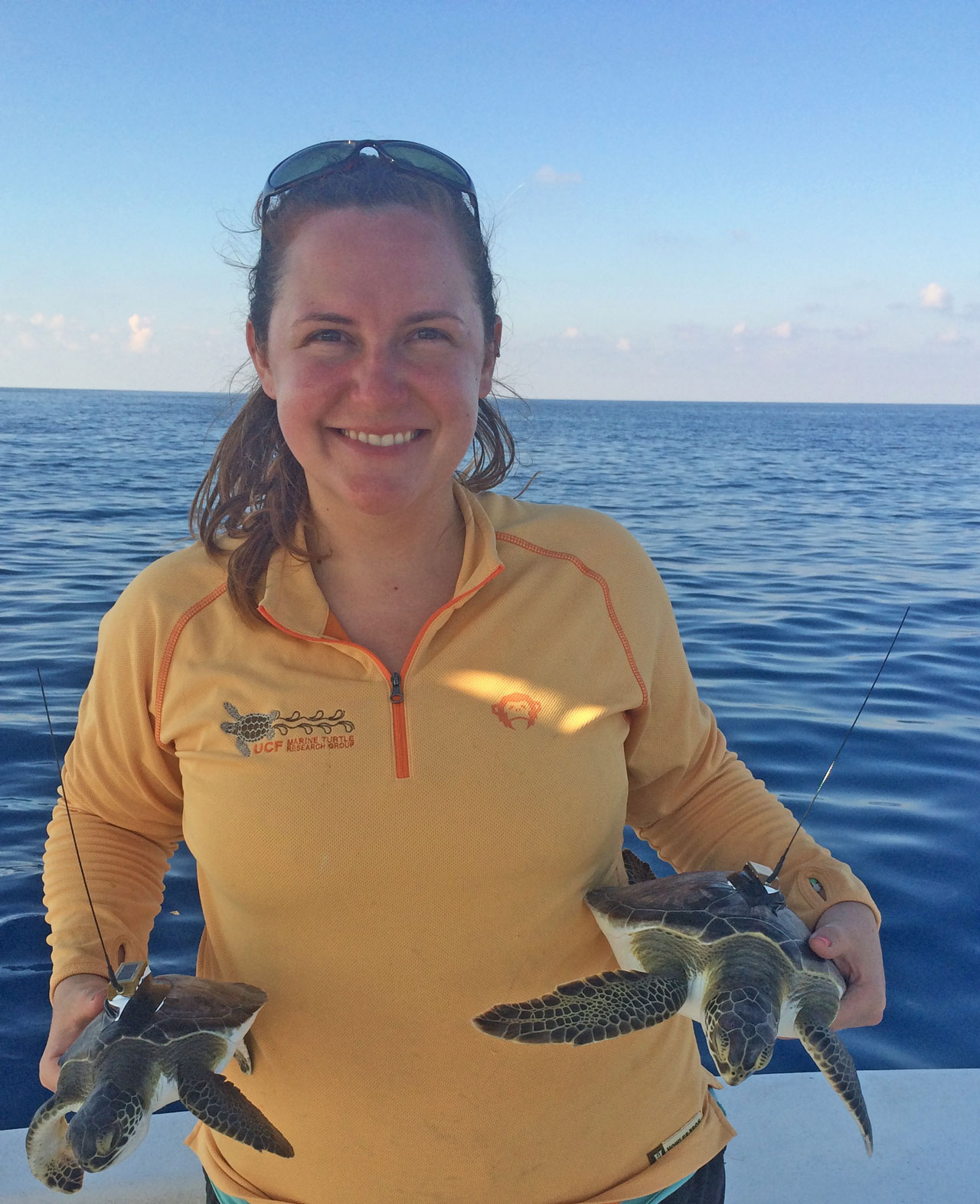
Dr. Katrina Phillips, DISL Senior Marine Scientist Good question. So technically we can tag, say a hatchling. But the sort of satellite technology to use a tag that you can track something remotely so far hasn’t been small enough to use on a hatchling. Well, both small enough and cheap enough because many hatchlings do get eaten, unfortunately. So a lot of the tracking studies for hatchlings off the beach have been with little radio tags, which work well. They’re very small and they don’t take a lot of battery power to transmit a radio signal. But the limitation is then you need to have a radio receiver either mounted somewhere where it’s going to pick it up, or you need to follow them around with an antenna. So when they’re heading hundreds of miles offshore, you can’t really follow them that whole way. So one cool development that’s happened in recent like ten to twenty years is that there’s now solar powered satellite tags. So the batteries are much smaller. You don’t need a big battery and you can tag much smaller things. So far we haven’t been able to track hatchlings with those yet. They’re not quite small enough for that, but we can track maybe one year old turtles. So some of my research was going out in the Gulf, finding turtles way offshore about a year old, and then using these solar powered tags that were originally developed for birds, actually to track turtles in that last year’s life stage.
Levins Katrina. When you talk about a one year old turtle, what is the size of that one one year old turtle? Is it like a deflated football size? Or is it maybe a little bigger than that or smaller than that? Because you see these hatchlings when they leave? I mean, they’re so tiny.
Phillips Yeah, that’s a good question. So they do grow pretty quick. And actually one interesting thing about turtles is that they can grow different rates depending on the temperature and how much food they’re getting. But kind of on average, the turtles that we’re talking about. Yeah, like a deflated football. They’re not big and round like a full football, but about the size of that, the dimensions of a football.
Levins The turtles get bigger than that deflated football too, right?
Phillps Absolutely. So when they’re full grown, if we’re talking about a loggerhead, they’re usually three feet or so long when they’re fully grown. So they get really big. So a one year turtle, a one year old turtle is about, you know, maybe a little less than a foot long.
Levins In talking about the tagging of them and you go out and you would tag the one year old turtles. One thing that you all have to think about when you tag a turtle, though, is their shell continues to grow. How do y’all meet that with attaching a tag? Is there some cool scientific fancy stuff y’all use?
Phillips Yes. There’s cool scientific fancy stuff we use that is mainly boat epoxy and aquarium silicone and um, sometimes a base coat of acrylic. Uh, because the material that a turtle’s outer shell or it’s called its carapace is made out of is keratin, which is the same thing that our fingernails and hair are made out of. And as they grow, the outer layer of that keratin sheds off and it grows kind of bigger and bigger underneath. So we do want to kind of promote that shedding to happen, because we don’t want to prevent them from growing at all. We do often use maybe like a base coat of acrylic, like you would on your fingernails to prevent it from peeling too quickly. And then, depending on the species, we’ve found different epoxies work better for some or others, and the goal is to have, again, for these little turtles, for it to stay on the tag, to stay on maybe a month or up to three months. And then after that shed off so that the turtle can continue growing without having to kind of grow around the tag for the fully grown turtles. They grow very slowly once they reach maturity. So we use much harder and sort of more not permanent, but a more long term epoxy on those turtles, and they can stay on for a year or two. You can get some really long tracking for the mature turtles.
Levins So working to track baby turtles that are right out of the nest, it’s in the works.
Phillips It’s in the works. We’ll get there.
Levins Um, but we do know that we can, that y’all can use something to track the turtles after about a year, they don’t have to continue to carry their tracker with them and some cool, fancy scientific stuff that y’all use epoxy and nail polish. That’s fascinating. Anything else that we should know about tagging turtles and kind of the process?
Phillips Because, I mean, that’s the way that you find out about where turtles go and how they’re nesting. And and then if we’re talking about the lost years, which is your research, whether babies are not necessarily babies, but that year old, one thing that really works in our favor in terms of using these solar powered tags is that when sea turtles are in this life stage, they spend most of their time at the surface. And that’s great for recharging a solar powered tag that they’re at the surface getting in direct contact with sunlight. So that’s really handy to be able to use these tags once they transition into closer to shore as sort of teenage turtles, they spend more time feeding on the bottom. And those solar powered tags aren’t quite as useful then because they wouldn’t have as much time to recharge.
Levins So Katrina, to wrap up with everything with tagging turtles, and it’s kind of cool to think about all the different pieces that have to go into being able to tag turtles and knowing that it’s only been the last decade or so that we’ve been able to tag year old turtles. What is the benefit to that? Yeah, well, we’re learning a lot about a life stage that we weren’t really able to follow before and look into more. What are the habitats that they use? How are the habitats connected?
Phillips A lot of the turtles that come through the Gulf might be transient here and actually come from somewhere else. And so it’s giving us a better picture of how our region is connected to other regions, and how it’s important for the different life stages of the turtles.
Levins Katrina, thank you so much for joining us to chat more about turtles and the tagging of sea turtles and the benefits and what we’re learning from it, and we look forward to chatting again.
Phillips I look forward to coming back.