In recognition of World Oceans Day, the Alabama Marine Mammal Stranding Network is proud to announce its participation in the founding of the National Marine Mammal Stranding Association, a landmark initiative designed to strengthen marine mammal rescue and response, improve coordination and training, and support the long-term health of marine mammals and ocean ecosystems across the United States.
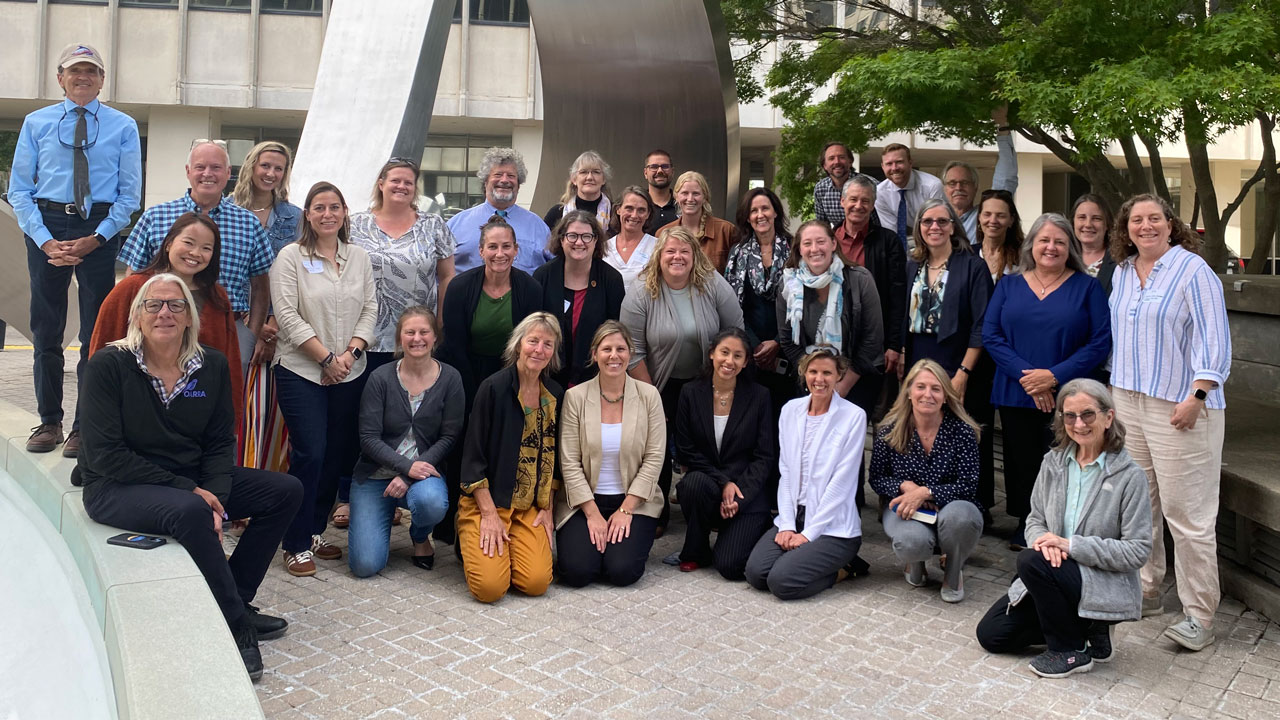
The NMMSA was developed by a nationally representative steering committee of marine mammal response leaders from across the country. The group convened on June 1 in Bethesda, Maryland, during Capitol Hill Ocean Week, with support from a NOAA John H. Prescott Marine Mammal Rescue Assistance Grant. That meeting helped lay the foundation for a stronger, more connected national response network.
“The Alabama Marine Mammal Stranding Network is honored to be part of the planning and development of this national group,” said Dr. Ruth H. Carmichael, the Director of the Dauphin Island Sea Lab’s Marine Mammal Research Program. “The NMMSA will benefit stranding network members across the United States by improving stranding response functions and outcomes for marine mammals and those who work toward stewardship of these living resources.”
Representing ALMMSN at the Bethesda meeting were Dr. Carmichael and Mackenzie Russell, Stranding Programs Manager. Both look forward to the benefits the new association will bring to Alabama and the broader Gulf Coast region.
The NMMSA launch follows months of planning by the nationally representative steering committee, with its formation finalized during Capitol Hill Ocean Week — a fitting milestone as the nation marks World Oceans Day and reaffirms its commitment to the health of marine ecosystems.
Marine mammal stranding response in the United States operates under the framework established through the Marine Mammal Protection Act, NOAA Fisheries’ Marine Mammal Health and Stranding Response Program, and the US Fish and Wildlife Service. Organizers say NMMSA is intended to complement that federal framework by strengthening collaboration, training support, communications, and resource sharing across the response Community.
“Marine mammal stranding responders play a critical role in increasing knowledge of marine mammals and advancing our understanding of ocean and ecosystem health,” said Sarah Wilkin, coordinator of the MMHSRP at NOAA Fisheries. “Efforts that strengthen collaboration, communication, and shared expertise across the stranding response network can help improve response capacity and support the long-term conservation of marine mammal populations.”
To report a stranded marine mammal, contact 1-877-WHALE-HELP.
About Alabama Marine Mammal Stranding Network
The Alabama Marine Mammal Stranding Network (ALMMSN) is a cooperative regional stranding network partner that works with NOAA’s National Marine Fisheries Service to respond to dolphin and whale strandings in Alabama. ALMMSN also works closely with the U.S. Fish & Wildlife Service to respond to manatee strandings in Alabama and Mississippi, as well as provide aid to the Florida Fish and Wildlife Conservation Commission in the Florida panhandle when needed. Our network is a nonprofit organization currently funded by a grant from the National Fish and Wildlife Foundation to establish and enhance a regional stranding collaboration among the Dauphin Island Sea Lab’s Manatee Sighting Network, Alabama Department of Conservation and Natural Resources, National Marine Fisheries Service, US Fish & Wildlife Service, and other local regional partners.
This press release includes information from the International Fund for Animal Welfare Organization provided for regional promotion. The National Marine Mammal Stranding Association steering committee is made up of members from The Marine Mammal Center (fiscal sponsor), Mote Marine Laboratory, Atlantic Marine Conservation Society, Cascadia Research, University of Hawaii, Alaska Veterinary Pathology Services, IFAW, and Whale and Dolphin Conservation. The committee surveyed marine mammal stranding responders to determine the greatest needs of network members.