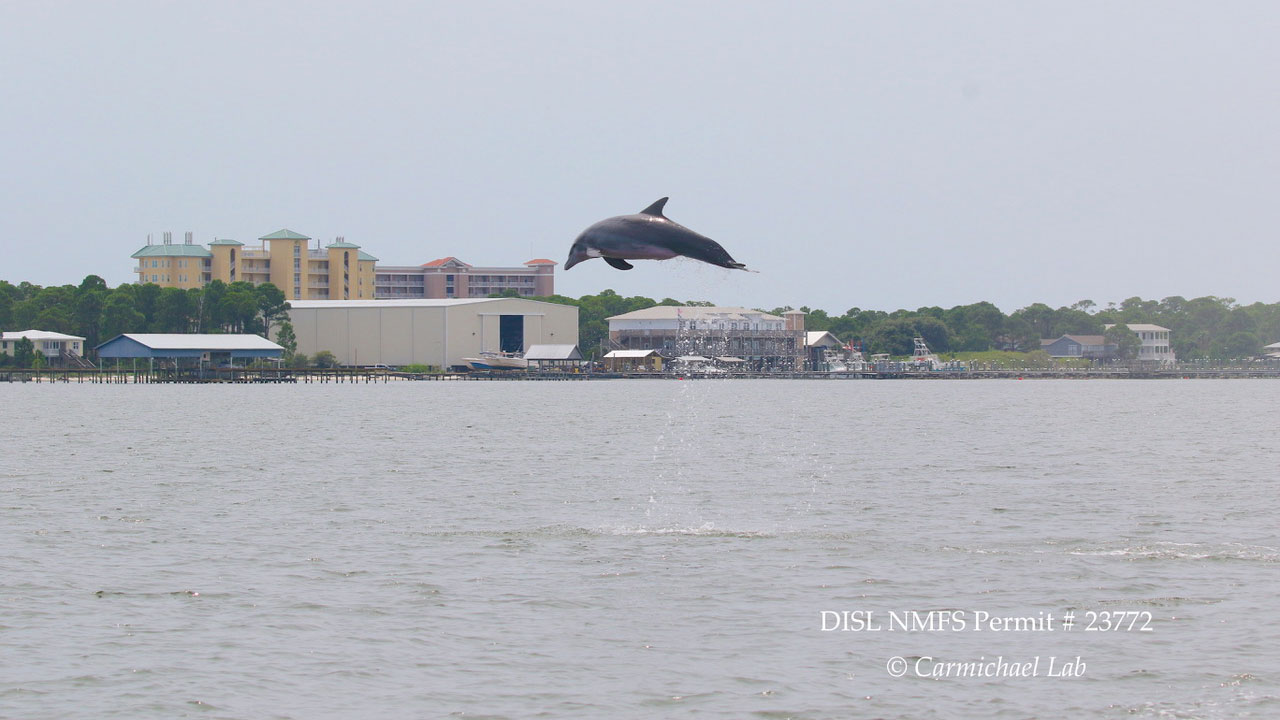
A new study published in Scientific Reports, a Nature journal, sheds light on how common bottlenose dolphins adjust their habitat use in response to dynamic environmental conditions in urbanized Gulf Coast estuaries.
A team of scientists from the Dauphin Island Sea Lab, the University of South Alabama, and NOAA’s National Marine Fisheries Service analyzed two years of environmental data and photo-identification data to map the drivers of dolphin habitat selection in Mobile Bay and Perdido Bay.
Mobile Bay is a large industrial estuary that includes a 13-meter-deep ship channel, while Perdido Bay is a smaller, shallower, and tourism-heavy area. This study revealed a seasonal shift in dolphin habitat use within and between these local waterbodies. During winter, dolphin distribution was primarily influenced by natural conditions, such as water temperature and dissolved oxygen, whereas in summer, dolphins showed greater use of human-modified habitats and structural features, including the Mobile Bay shipping channel.
In Mobile Bay, the dolphins were closer to the shore and near the Mobile Bay Pass, a key confluence point. However, in Perdido Bay, the dolphins stayed closer to gillnet exclusion zones. These factors are likely linked to effects on both dolphin physiology and the distribution of their prey, driving changes in habitat selection.
This study demonstrates that shipping channels can be vital habitats for dolphins. Activities that typically occur in these areas, such as dredging and vessel traffic, increase the potential for human interactions that could be harmful to humans and dolphins.
The data from this study provide an essential baseline for understanding local habitat use by dolphins. The researchers emphasize the need for long-term, year-round monitoring to support the management and conservation of dolphins and other living resources in these dynamic, human-influenced habitats.